
Data
Multiple currencies
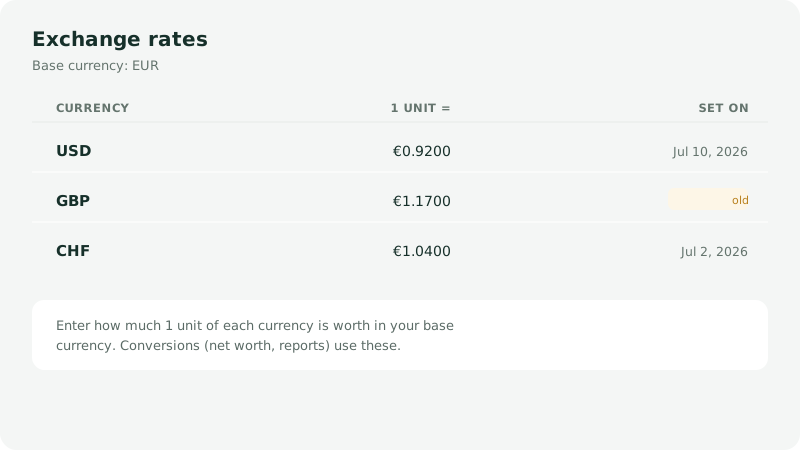
Each account has its own currency. If you only use one, there’s nothing to configure. As soon as a second account uses a different currency, Arca needs an exchange rate to work out your net worth and reports in a common base currency.
Setting an exchange rate
Section titled “Setting an exchange rate”From Settings → Exchange rates, enter how much 1 unit of each currency is worth in your base currency. Every conversion (net worth, reports, transfers between accounts in different currencies) relies on these rates — Arca doesn’t fetch them automatically.
Missing rate
Section titled “Missing rate”If a needed rate isn’t set, Arca flags it right where it matters:
- on the Accounts page, a “Missing rate: {currencies} — net worth approximate” badge,
- on Reports, the same warning for converted amounts,
- during a transfer between two accounts in different currencies with no rate set: the received amount equals the sent amount (no conversion), with a prompt to set the rate in Settings → Exchange rates.
Budget currency
Section titled “Budget currency”This is the currency your net worth and reports are totaled in. It isn’t a setting: Arca derives it from your accounts. It’s the currency of the oldest account that is still open and on budget.
To change it, change which account it comes from — there is no toggle. There used to be one, next to language and theme; removing it was deliberate. It looked cosmetic, yet changing it silently pushed every account in a different currency out of the budget. Settings → Preferences now shows the currency without letting you edit it.
The amount is frozen when you record it
Section titled “The amount is frozen when you record it”When a transaction lands on an account whose currency differs from the budget’s, Arca also stores its converted amount as of that moment.
The intended consequence: your past reports stop moving when a rate changes. A $100 expense recorded in January stays worth what it was in January, even if you fix the rate in June.
- Flows (spending, income, reports) use the rate frozen at entry.
- Account balances use today’s rate, because they represent money actually sitting there.
The gap between the two isn’t a rounding bug — it’s your foreign-exchange gain or loss.
Was this page helpful?
Thanks — noted.